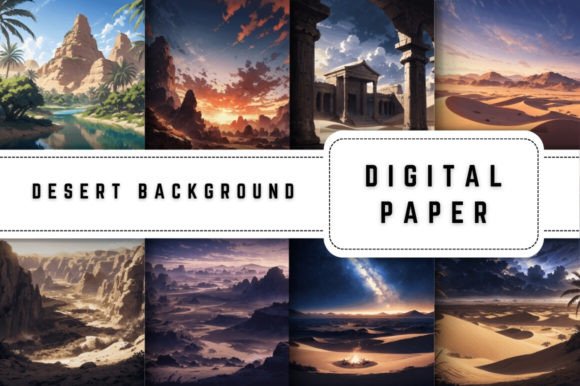
Desert Digital Paper: Arid Elegance for Creative Projects
There is a distinct quietness to desert landscapes—the long shadows at dusk, the ripple of sand dunes, the warmth of sun-bleached earth. Desert Digital Paper captures that stillness and translates it into a versatile design resource. These high-resolution patterns, sized at 4096 x 4096 pixels, bring the texture and color of arid environments directly into your creative toolkit. Whether you are building a brand identity, designing a scrapbook page, or creating digital art, these patterns offer a grounded yet evocative aesthetic that works across many applications.
What makes desert-inspired patterns compelling is their balance between warmth and restraint. They are not overly busy or distracting. Instead, they provide a subtle, textured foundation that can anchor a composition or serve as a backdrop for bolder elements. The sandy gradients, cracked earth motifs, and muted terracotta tones evoke a sense of timelessness. This quality makes them especially useful for projects that aim to feel natural, organic, or handcrafted.
What Makes Desert Digital Paper Distinct
At its core, Desert Digital Paper is a collection of surface patterns designed to mimic or abstract the visual language of desert environments. The patterns in this set include sandy textures, dune-like undulations, rock formations, and warm color palettes ranging from pale beige to deep ochre. Each image is rendered at 4096 x 4096 pixels, which means you get crisp detail whether you are printing at large scale or using the pattern as a digital background.
The resolution matters because it preserves the subtle variations in texture. A low-resolution pattern might look flat or pixelated when stretched, but these digital papers maintain their integrity. That is important for professional work—whether you are a graphic designer preparing a print-ready invitation or a blogger creating a featured image for a post. The clarity of the pattern becomes part of the overall impression.
Another distinctive feature is the variety of designs. Twelve unique patterns means you are not limited to a single look. Some patterns lean toward abstract, almost painterly interpretations of sand and stone. Others are more literal, with visible grain and organic shapes that mimic actual desert surfaces. This range allows you to match the mood of your project precisely.
Creative Applications Across Different Audiences
Different users will find different entry points into these patterns. A wedding invitation designer, for example, might use a soft sand texture as a background for typography. The warmth of the pattern adds depth without competing with the text. A small business owner creating social media graphics for a lifestyle brand could use a terracotta-toned pattern as a consistent visual element across posts. The repetition of a recognizable pattern helps build brand cohesion.
For educators and content creators, desert patterns can serve as slide backgrounds or worksheet borders. They are more interesting than plain white or solid color, but they remain professional and uncluttered. A history teacher creating a lesson about the American Southwest, for instance, could use a cracked earth pattern to visually reinforce the topic. The pattern becomes a subtle teaching tool rather than mere decoration.
Hobbyists and scrapbookers will appreciate the tactile quality of these digital papers. Even in digital form, the patterns suggest texture—the roughness of sandstone, the smoothness of wind-swept sand. When printed, they can add a physical dimension to a page layout. Layering a patterned paper behind a photograph or a journaling card creates visual interest without requiring complex design skills.
Using Desert Patterns in Digital Art and Illustration
Digital artists often work with layered compositions, and desert patterns can function as either background or texture overlay. You might use a sand pattern as a base layer and then paint or draw over it, allowing the texture to show through in places. This technique adds an organic feel that is hard to achieve with flat digital brushes alone.
Another approach is to use the pattern as a mask or clipping layer. By applying a desert pattern to a shape or text, you instantly give it a material quality. A word set in a bold typeface and filled with a sandy pattern reads differently than the same word in solid black. It carries the weight and warmth of the desert, which can be effective for titles, logos, or branding elements.
If you work in procreate, Photoshop, or affinity designer, these high-resolution files import easily and scale well. The 4096 pixel size gives you room to crop, rotate, or reposition the pattern without losing quality. That flexibility is essential when you are experimenting with different layouts or compositions.
Practical Guidance for Effective Use
To get the most out of Desert Digital Paper, think about contrast and layering. Because desert patterns tend to be warm and relatively neutral, they pair well with both bright accent colors and deep, dark tones. A bright turquoise or cactus green can pop against a sandy background. Similarly, charcoal or navy text stands out clearly on a lighter pattern.
Consider the scale of the pattern relative to your canvas. A large pattern might look overwhelming on a small card, while a very detailed pattern could become distracting if used as a full-screen background. You can always adjust the scale in your design software, but it helps to preview the pattern at the intended output size before committing.
For printed projects, test the pattern on paper before printing in bulk. Digital screens display colors differently than printed media, and the warmth of desert tones can shift slightly depending on the paper stock. A matte finish usually enhances the organic feel, while glossy paper might make the pattern appear sharper and more saturated.
Maintaining Consistency Across Projects
If you are using these patterns for a series of materials—say, a wedding suite or a set of social media templates—choose two or three patterns that complement each other and stick with them. Using too many different patterns can make the collection feel disjointed. Instead, treat the patterns as a cohesive palette. One pattern can serve as the primary background, another as an accent for borders or dividers, and a third for smaller decorative elements.
Consistency also applies to color. Even though the patterns vary in design, they share a warm desert palette. That inherent cohesion is a built-in advantage. You do not need to spend time color-matching or adjusting hues because the collection is already curated to work together.
Adapting Desert Patterns for Different Formats
The versatility of these digital papers extends across formats and platforms. For web use, such as blog backgrounds or website headers, the high resolution allows you to crop and compress without visible artifacts. Just remember to optimize the file size for web delivery so that page load times remain fast.
For print, the 4096 pixel resolution gives you enough detail for most standard sizes. An A4 or letter-sized print will look sharp, and you can even scale up to larger formats like posters or signage if the pattern is not overly detailed. For best results, save your final file at 300 DPI and use the original PNG or JPEG from the download.
Digital planners and note-taking apps are another growing use case. Many users enjoy customizing their digital notebooks with themed backgrounds. A desert pattern on a planning page adds visual warmth without interfering with functionality. Because the patterns are high-resolution, they remain clear even when viewed on high-density screens like tablets or retina displays.
Why These Patterns Resonate with Creative Professionals
There is a reason desert imagery appears so often in design. The desert represents endurance, simplicity, and natural beauty. It is not a fleeting trend. The color palette—sandy beige, terracotta, rust, dusty rose, and muted gold—has become a staple in modern design because it feels grounded and sophisticated. These patterns tap into that broader aesthetic while offering specific textures that are not easily replicated with generic gradients or stock textures.
For freelance designers and small business owners, having a set of reliable, high-quality patterns in your library saves time. Instead of searching for a texture that matches your vision, you can pull from a curated collection that already delivers the look and feel you need. That efficiency matters when you are juggling multiple projects or tight deadlines.
Marketers and bloggers will find that desert patterns add a professional finish to visual content. A consistent background pattern across social media graphics or blog post images signals attention to detail. Even subtle use—like a narrow border or a half-page overlay—can elevate the overall presentation without shouting for attention.
Practical Inspiration for Your Next Project
If you are looking for a starting point, consider a simple application: a set of thank-you cards. Use a sandy desert pattern as the card front, add a clean sans-serif typeface for the text, and finish with a neutral envelope. The result is elegant, understated, and distinctly warm. It works for personal correspondence as well as for client gifts or promotional mailers.
For digital products, such as printable wall art or planner inserts, desert patterns can serve as the primary design element. A single pattern, framed and displayed, becomes a piece of abstract art. The natural variations in the texture give it depth, so it does not feel flat or mass-produced.
Social media templates also benefit from these patterns. A quote graphic over a warm desert background feels more inviting than a plain white or black image. The pattern adds context and mood without requiring additional imagery or illustration. Keep the text minimal and let the pattern carry the atmosphere.
Educators and workshop facilitators can use the patterns in presentation slides. A consistent desert theme throughout a slide deck ties the content together visually. It also helps set a tone that is calm and focused—appropriate for both creative workshops and more analytical presentations.
Bringing It All Together
Desert Digital Paper offers more than just a set of attractive backgrounds. It provides a visual language that conveys warmth, stability, and natural elegance. The high resolution, variety of patterns, and cohesive color palette make it a practical resource for anyone who works with visual content. Whether you are designing for print, digital, or social media, these patterns can enhance your work without dominating it.
The best designs often come from resources that are both inspiring and reliable. Desert Digital Paper fits that description. It gives you the creative freedom to explore and experiment, while the technical quality ensures your final output looks polished. Download the set, try a few combinations, and see how the quiet beauty of the desert can transform your next project.