4th of July Seamless Pattern 49: A Versatile Digital Asset for Patriotic Projects
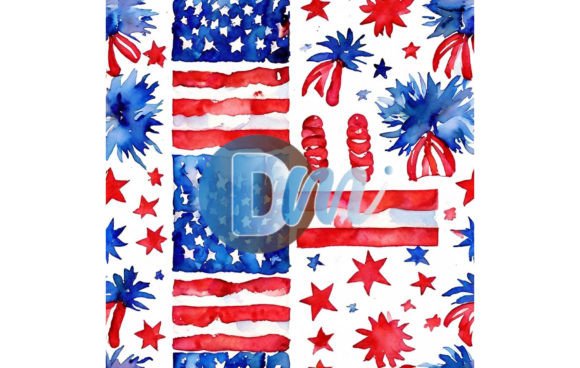
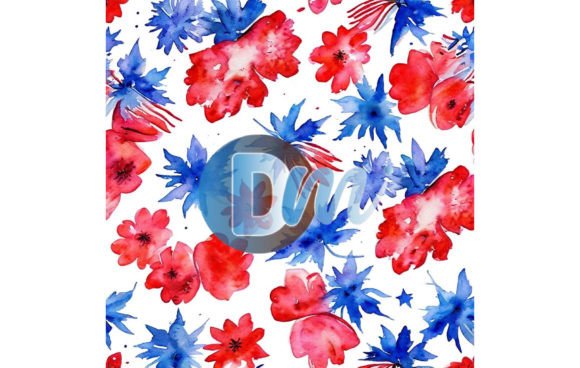
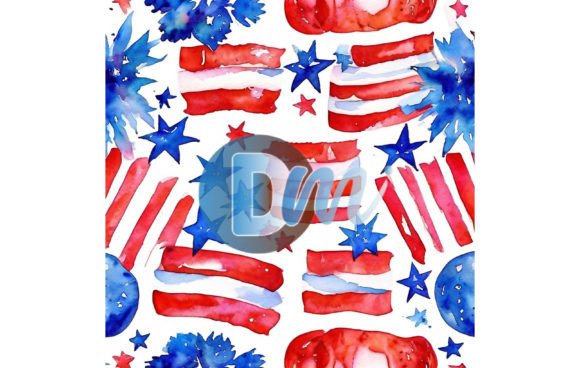
When planning a patriotic-themed project, a well-designed pattern can serve as the foundation for a unified visual identity. The 4th of July Seamless Pattern 49 is a digital download that offers a ready-to-use, repeating design built around classic Independence Day motifs. Unlike generic clip art or single-use graphics, this pattern is specifically crafted to tile seamlessly, making it suitable for everything from small-scale party decorations to full-size wallpapers. Because it arrives as an instant download with a high-resolution 300 DPI JPEG, you can start using it within minutes of purchase—no waiting for shipping or handling physical goods. This convenience, combined with its thematic focus, positions the pattern as a practical resource for anyone creating materials for summer celebrations, promotional campaigns, or personal projects.
What Makes 4th of July Seamless Pattern 49 Worth Considering
The primary value of any seamless pattern lies in its ability to repeat without visible seams, creating a continuous, professional finish across a surface. The 4th of July Seamless Pattern 49 meets this requirement with a design that appears thoughtfully balanced—elements are distributed to avoid awkward gaps or clumping when tiled. The theme is distinctly American in a festive, family-friendly way, avoiding overly commercial or political imagery. This makes it appropriate not only for personal use but also for small business marketing materials, educational handouts, and community event flyers. The digital nature of the product means you retain full control over scaling, color adjustment, and placement within your own design software, as long as you respect the single-image format. For users who need a quick, cohesive background that appeals to a broad audience, this pattern offers a straightforward solution.
Key Characteristics and Strengths
Examining the technical specifications reveals both the strengths and the intended use cases. The file is a single JPEG image at 1024 x 1024 pixels with a resolution of 300 DPI. Here are the defining characteristics:
- Seamless repeatability: The edges of the pattern are designed to match perfectly when tiled horizontally and vertically. This allows you to fill any sized area without the distracting lines that occur with non-seamless images.
- High resolution for its size: 300 DPI at 1024 pixels means the pattern can be printed clearly at about 3.4 inches by 3.4 inches at full resolution. For larger areas, you tile the pattern within your layout software, maintaining crisp detail on each repeat.
- Single-file simplicity: Having one JPG file keeps the download lightweight and easy to manage. There are no layered files, multiple color variants, or vector formats to sort through. This reduces clutter and fits workflows where a basic, high-quality backdrop is all that is needed.
- Instant delivery: Because it is an immediate download, you can incorporate the pattern into last-minute projects without express shipping delays. This is especially valuable for event planners and educators who work on tight schedules.
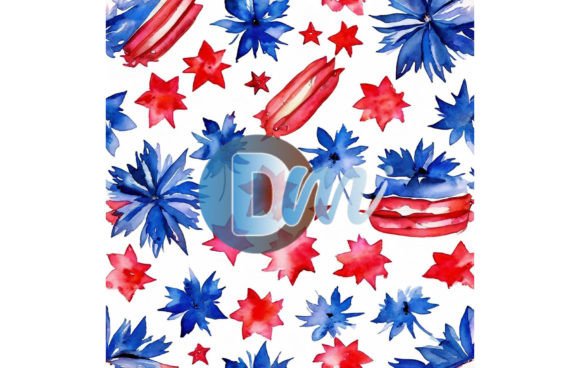
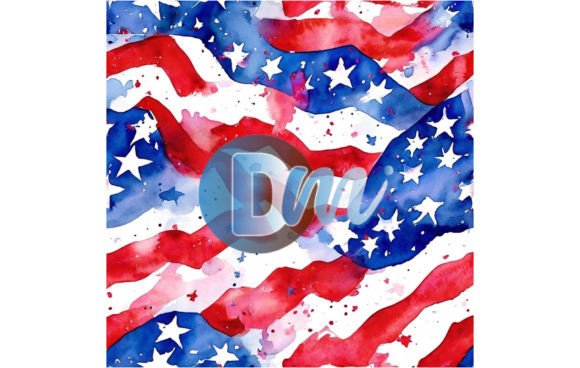
The pattern itself likely combines stars, stripes, and subtle sparkles or bunting elements that evoke a festive mood without overwhelming the foreground content. This balance is critical for patterns intended as backgrounds rather than focal images.
Practical Value in Real-World Applications
The versatility of the 4th of July Seamless Pattern 49 becomes evident when you consider its range of potential uses. Below are realistic scenarios where this pattern performs well:
- Paper goods and invitations: Use it as a background for party invitations, thank-you cards, or place cards for a July 4th barbecue. The seamless nature ensures that the design wraps around the card edges uniformly, giving a professional, printed appearance.
- Digital backgrounds for social media and web: The 1024 x 1024 pixel size is ideal for Instagram posts, Facebook covers, or YouTube thumbnails when resized within design tools. The repeating ability also allows you to create larger website banners by tiling the pattern, though you must pay attention to how it looks across wider screens.
- Desktop wallpapers and device backgrounds: Because it is a single, high-resolution image, you can set it directly as a phone wallpaper or a small portion of a desktop wallpaper. Tiling in your operating system settings will fill the screen seamlessly, though you may want to adjust the tile size to avoid overly small repeats on large monitors.
- Scrapbooking and physical crafts: Print the pattern on standard or adhesive paper at the appropriate scale and use it as a decorative layer in scrapbook layouts, gift tags, or card embellishments. The 300 DPI ensures that even small printed areas retain sharpness.
- Party decorations and bunting: Tile the pattern to create custom wrapping paper, table covers, or backdrop banners. For a cohesive party theme, you can print multiple copies and assemble them into a repeating wall covering.
In each of these applications, the pattern functions as a reliable foundation. It does not compete with text or foreground graphics, and its seamless property eliminates the amateurish look of cut-off motifs.
Quality and Usability Considerations
From a quality standpoint, a 1024 x 1024 pixel JPEG at 300 DPI offers acceptable clarity for many on-demand print tasks. For large format printing, such as a 3-foot by 4-foot banner, you would need to tile the pattern across the canvas, which can be done in applications like Adobe Photoshop, Canva (Pro), or any software that supports pattern fills. The single JPG format means you cannot adjust individual elements within the pattern—what you see is what you get. This simplicity is a strength for users who do not need to edit the design itself, but it may feel limiting to those who prefer layered files for color correction or element removal. The pattern's repeatable design, however, is the core feature, and the file handles that well.
Another usability factor is the absence of a physical product. While this is clearly stated, it means you must have access to a printer or digital display to use the pattern. The download is a single JPG, so you should back it up in your own storage. The 300 DPI resolution is considered standard for print, but note that the small pixel dimensions restrict your full-resolution print size to about 3.4 inches square. For larger prints, the pattern will need to be tiled, which reduces the effective resolution per tile at larger scales. If you need a pattern that remains sharp at poster size without tiling, you would require a much larger source file. Within its intended range—cards, invitations, decor items under 12 inches—this pattern delivers crisp, satisfying results.
Who Benefits Most from This Pattern
The 4th of July Seamless Pattern 49 suits a range of creators, but certain groups will find it especially useful:
- Small business owners and entrepreneurs who need seasonal packaging, promotional flyers, or social media graphics quickly. A single download provides a consistent theme that can be applied across multiple assets, saving time and design effort.
- Event planners and party hosts organizing Independence Day celebrations. The pattern can be used for custom invitations, menu cards, decor, and even signage, ensuring a coordinated look without hiring a graphic designer.
- Freelancers and graphic designers working on budget-friendly projects for clients. The pattern can serve as a ready-made background element that can be layered with other design elements, reducing project turnaround time.
- Educators and camp counselors preparing patriotic worksheets, banners, or bulletin boards. The seamless repeatability makes it easy to fill large poster board or digital presentations without gaps.
- Serious hobbyists and scrapbookers who enjoy creating themed albums or cards. The high resolution and clean design allow for detailed printing on various paper types.
- Bloggers and content creators needing a consistent background for video thumbnails, podcast graphics, or product photography backdrops. The pattern adds a festive touch without overpowering the main subject.
If your work involves any of these scenarios, this pattern presents a low-cost, low-effort way to enhance visual consistency.
Limitations and Practical Recommendations
While the pattern is functional, it is important to understand its boundaries. The most significant limitation is the file type: a single JPEG. There is no SVG, PNG with transparency, or layered PSD included. This means you cannot isolate elements, change colors independently, or use a transparent background. If your project requires a pattern to sit behind text without a white square, you will need to use your design software to set the tiling and possibly mask the JPEG. Also, the simple 1024 x 1024 pixel canvas may be too small for users who want a pattern that covers a large artboard in full resolution. For example, if you design a poster at 300 DPI measuring 24 inches by 36 inches, tiling this pattern would require many repeats, and each repeat would be only 3.4 inches wide—potentially resulting in a very busy look.
To maximize the pattern's effectiveness, consider these practical recommendations:
- Design your project at a scale where the repeat size feels natural. For an 8.5 x 11 inch flyer, setting the pattern to repeat roughly 2–3 times across the width often looks balanced.
- Use design tools that support pattern fills (e.g., Canva, Photoshop, Illustrator, or Affinity). Define the 1024 x 1024 image as a pattern swatch, then apply it to your canvas. This approach retains the seamless quality while giving you control over scale.
- Pair the pattern with bold, solid-colored text or graphics to maintain readability. Because the pattern has moderate complexity, light or thin fonts may get lost against some areas.
- Test print a small section of your project with the pattern tiled to ensure the printer handles the color and detail appropriately. Some low-end printers may show banding on large areas of repeated pattern.
Acknowledging these limitations upfront helps you decide whether the pattern fits your specific workflow without disappointment. It is not a comprehensive design kit, but a focused, well-crafted element for straightforward use.
Long-Term Value and Final Thoughts
Digital assets like the 4th of July Seamless Pattern 49 offer long-term value primarily through reusability. Since you own the file indefinitely, you can reuse it across multiple projects in different years. The design is seasonal, so its use is largely limited to the period around Independence Day, but within that niche, it serves as a dependable resource. If you create content each July, having a reliable pattern in your library saves time and ensures brand consistency across annual campaigns. The pattern is also straightforward enough to be used in combination with other elements, extending its utility beyond standalone applications. Ultimately, this pattern is worth considering if you need a clean, seamless, patriotic background that works both digitally and in print at small to medium scales. It delivers on its core promise: a high-resolution, instantly downloadable, repeating design for your Independence Day projects. By understanding its strengths and working around its simplicity, you can integrate it effectively into your creative toolkit.